My Cart: 0 item(s)

Alpine Dryers Blog
What Size Boot Dryer Do I Need? A Sizing Guide by Household, Sport and Facility
by Alpine Dryers • November 17, 2026
Quick Answer
Size a boot dryer for your busiest night, not an average one. Count everyone who comes in wet, give each person two ports for boots and two for gloves, add helmets if you dry them, then add one extra pair. A family of four that skis needs about 8 pairs of capacity. One commuter needs 1 to 2.
Most people buy too small. The dryer works fine for a month, then the holidays arrive, the cousins show up, and half the boots spend the night on the floor. This guide helps you buy the right size once.
Why Capacity Is the Holiday Buying Mistake
People buy boot dryers as gifts in late November and December, usually by guessing. The guess is almost always "one pair per person." That leaves no room for gloves, which soak through faster than boots, and no room for the second pair of ski socks, the hockey helmet or the guest who forgot their own dryer. A dryer that is always full is always slow.
Count Ports, Not People
A "pair" on a boot dryer means two drying ports. Each boot takes one port. Each glove takes one port. The ALPINE DRYERS PRO 6-pair, for example, has 12 individual drying ports, which covers six pairs of boots, or three people's boots and gloves, or any mix you can hang on it. Some models also list helmets separately, so check what each port and attachment is built for.
Use this five-step count:
- Pick your busiest night. The holiday week, the tournament weekend, the full crew after a storm shift.
- Count the people who come in with wet gear that night, guests included.
- Count items per person. Boots are two ports. Gloves or mittens are two more. Add helmets, skates or shoes if you dry them.
- Add a buffer of one extra pair for guests, second pairs and socks.
- Match the total to a series and size in the table below.
Sizing Chart by Situation
| Situation | Typical busiest-night load | Capacity to buy |
|---|---|---|
| One adult, daily commute or work boots | 1 pair boots, 1 pair gloves | 1 to 2 pairs |
| Couple who ski or snowshoe | 2 pairs boots, 2 pairs gloves | 4 pairs |
| Family of four, one or two in winter sports | 4 pairs boots, 2 to 4 pairs gloves | 4 to 8 pairs |
| Family of four, everyone skis or plays hockey | 4 pairs boots, 4 pairs gloves, helmets | 8 pairs or more |
| Ski house or rental hosting 8 to 12 guests | 8 to 12 pairs boots plus gloves | 12 pairs or more |
| Youth team, school or athletic facility | 12 to 24 athletes | 12 to 24 pairs, expandable |
| Crew, station or locker room | One set per person on shift | Locker units per person, or a wall unit sized to the shift |
What Changes the Math
Gloves dry slower than you think. Insulated gloves hold water deep in the fingertips. If gloves are the item that is always damp in the morning, give them their own ports instead of draping them over a boot.
Helmets and skates take space. A helmet needs a tall arm or a helmet attachment. Count it as its own item.
Back-to-back days raise the stakes. If the gear goes back on at 7 a.m., every item needs a port overnight. If people only go out on weekends, you can rotate.
Growth is real. Kids start a sport. A second skier joins. Buying a system that expands is cheaper than buying twice. The PRO system grows from 6 to 24 pairs with expansion units, and each unit carries its own blower, so adding capacity does not split the airflow.
Match the Dryer to the Job
Prices are as listed on alpinedryers.com in November 2026.
| Capacity you need | Best fit | Why | Listed price |
|---|---|---|---|
| 1 to 2 pairs, inside a locker or under a bench | Zephyr Locker Dryer, 1-pair or 2-pair | Mounts inside lockers and under shelves; dries boots, gloves and a helmet | $279 to $349 |
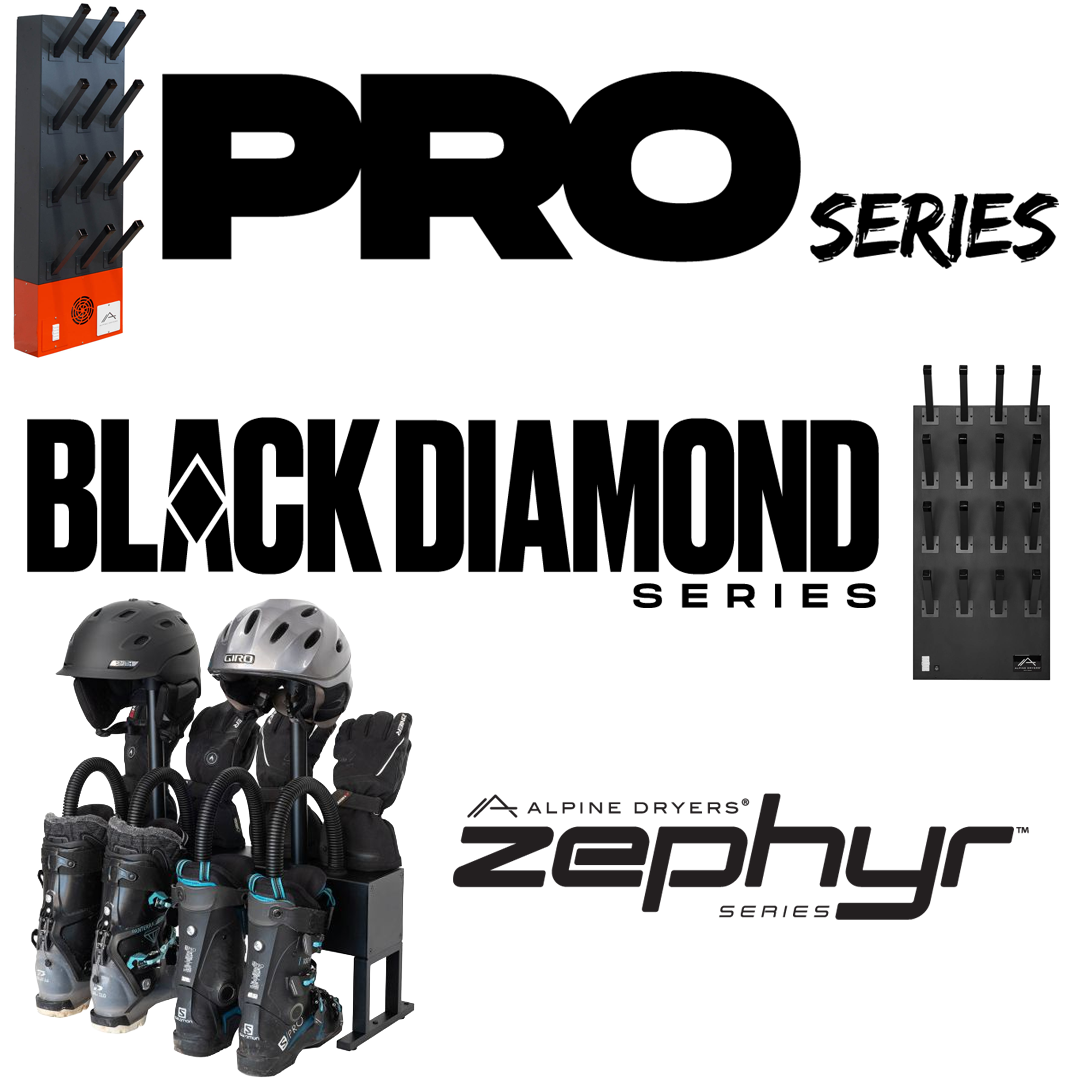
| 2 to 12 pairs, home mudroom or garage | Zephyr Series, 2, 4, 8 or 12-pair | Freestanding or wall mount; room-temperature air; helmet arms included by size | $299 to $999 |
| 4, 8 or 16 pairs on the wall | Black Diamond Series | Wall-mounted, made in the USA | $999 to $3,299 |
| 6 to 24 pairs, heavy daily use or growth | ALPINE DRYERS PRO | High-velocity blower, self-regulating heat, 2 to 12 hour timer, expandable | From $1,949 (6-pair horizontal) |
For a home or mudroom, start with the Zephyr Series gear dryers or the wall-mounted Black Diamond Series. For a ski house, team or anyone who expects to grow, the ALPINE DRYERS PRO system is built to expand. If each person needs their own spot, a Zephyr locker dryer fits inside a single locker.
Buyer's Checklist
- Ports: boots and gloves for everyone on your busiest night, plus one pair.
- Helmet and skate space: tall arms or helmet attachments if you need them.
- Expandability: can you add capacity later without buying a second dryer?
- Air type: room-temperature air or self-regulating heat, based on your gear.
- Timer: preset cycles with automatic shutoff for overnight drying.
- Mounting: wall, freestanding or locker, based on floor space.
- Power: standard 120V outlet in North America, 230V models elsewhere.
Planning the room around the dryer too? We covered drainage, outlets and layout in the Gear Room Setup Guide.
Frequently Asked Questions
What size boot dryer do I need for a family of four?
Plan for 4 to 8 pairs. If only one or two people are in winter sports, 4 pairs covers boots plus some gloves. If everyone skis or plays hockey and needs boots, gloves and helmets dry every night, buy 8 pairs or a system you can expand.
Does a 6-pair boot dryer dry 6 pairs of boots and 6 pairs of gloves?
Usually not. Capacity is counted in pairs of ports. A 6-pair dryer like the ALPINE DRYERS PRO has 12 ports, so it dries 6 pairs of items in total: six pairs of boots, or three people's boots and gloves. Check each model's port and attachment count.
How many pairs does a ski house boot dryer need?
Size it for peak occupancy. A house hosting 4 to 6 guests needs about 8 pairs. A house hosting 8 to 12 guests needs 12 pairs or more, especially if guests also dry gloves and helmets.
Is it better to buy one big dryer or several small ones?
One shared wall unit works best when people share a mudroom or gear room. Several small locker units work best when each person has an assigned locker or spot. Shared room-temperature units usually cost less per pair of capacity.
Can I add capacity to a boot dryer later?
Only if the system is built for it. The ALPINE DRYERS PRO grows from 6 to 24 pairs with expansion units, and each unit has its own blower so airflow stays strong at every port.
What is a good boot dryer gift for one person?
For one person, a 2-pair dryer covers their boots and gloves, which is what usually stays wet. If they use a locker at work, a gym or a ski area, a locker-mounted dryer is the better fit.
The Bottom Line
Count ports for your busiest night, include gloves and helmets, add one pair, and buy a system that can grow if your household or team might. That one count saves you from a dryer that is full every night and slow every morning.
Not sure which size fits? Call Alpine Dryers at 800-964-3095.
Related Posts and Information
overall rating:
my rating:
log in to rate