My Cart: 0 item(s)

Alpine Dryers Blog
Is It Safe to Leave a Boot Dryer On Overnight?
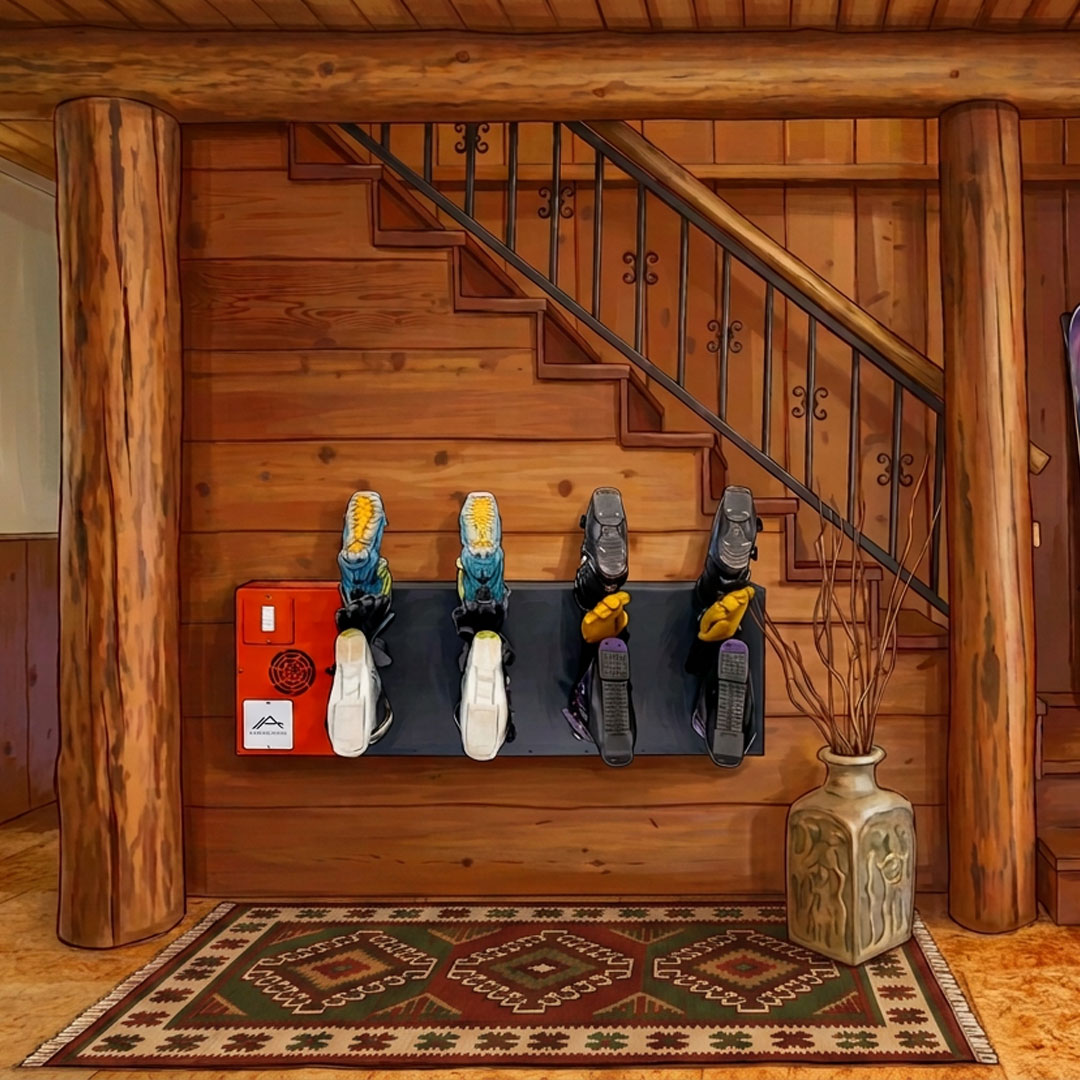
by bruce golub • August 05, 2026
You plug it in before bed and then lie there running the math. Twelve hours unattended, boots stacked on the ports, nobody checking on it until morning. It's not an unreasonable thing to think about.
That hesitation isn't paranoia it's the right question to ask before leaving any heated appliance running while you sleep.
Parents drying cleats and skates before a 6 a.m. practice need the dryer running through the night, every night, all season. Ski house owners and lodge managers run units unattended in mudrooms with nobody around until morning. Firehouses and EMS crews need turnout gear and boots dry before the next call, whatever hour that call comes in.
What Actually Causes a Boot Dryer Fire
The risk isn't airflow; it's unregulated heat with nowhere to go. A cheap resistive heating element that runs at a fixed temperature, with no thermostat and no shutoff, is doing the same thing space heaters do when they show up in house fire statistics: converting electricity into heat with no upper limit and no timer to stop it.
Boot dryers draw far less power than the appliances that usually pose a fire risk. Most boot dryers, including Alpine Dryers, run in the 100–200-watt range per unit. Compare that to a space heater at roughly 1,500 watts, or a hair dryer at 1,800 watts. Wattage alone isn't the deciding factor; the key is whether the heat is regulated and whether the unit shuts off.
Why Self-Regulating Heat Changes the Answer
Alpine Dryers units use a self-regulating heating element that raises air only slightly above ambient temperature and holds it there. It doesn't climb, and it doesn't need a person watching a dial to keep it from climbing. Pair that with a push-button timer that shuts the whole system off automatically after 2, 4, 8, or 12 hours, and you've eliminated both variables that turn "left the heat on all night" into a cautionary tale.
That's the honest answer: a boot dryer with self-regulating heat and an auto shutoff timer is built to run unattended. A decades-old resistive dryer with no timer, sitting on a pile of towels in a closet, is a different piece of equipment entirely, and that's the one worth being cautious about. We covered how that same self-regulating design holds up over time in our look at why Alpine Dryers are made in the USA.
What to Unplug Instead
Old or unbranded resistive-heat dryers without a timer or thermostat: unplug them when you're not around to check on them, the same way you'd treat an uninspected space heater. Any dryer with frayed cord insulation should be replaced rather than run overnight. Units piled with extra gear gloves, hats, socks draped over the ports should be cleared first. Blocked airflow around a heat source is where real risk starts, timer or not, an overloading issue we flagged in our rundown of common boot dryer mistakes.
Best for: anyone running a self-regulating, timer-equipped dryer like the PRO Series or Black Diamond Series overnight in a mudroom, garage, or locker room with normal clearance around the unit.
Skip it if: you're running an older resistive dryer with no auto shutoff, a frayed cord, or a unit buried under extra gear. Fix or replace those conditions before trusting anything to run unattended.
Frequently Asked Questions
Can I leave a boot dryer on all night?
Yes, if it has a self-regulating heating element and an automatic shutoff timer. Those two features are what make unattended overnight use safe without them, treat the dryer the way you would any unmonitored heat source.
Can you leave boots on a boot dryer overnight?
Yes. Most boots fully dry in 3–8 hours depending on saturation, so an overnight cycle on a timer-equipped dryer typically finishes with time to spare before auto shutoff.
Can a boot dryer stay on all night?
A dryer with a preset timer (2, 4, 8, or 12 hours) shuts off on its own if it's running for a bounded window you set before bed, not unmonitored indefinitely.
Is it safe to leave a boot dryer on overnight?
It's safe when the unit uses self-regulating, ambient-rise heat rather than a fixed high-temperature element, and has an auto shutoff. Check both before trusting any dryer to run while you sleep.
Are boot dryers a fire hazard?
Low-wattage dryers with regulated heat and auto shutoff carry meaningfully less risk than space heaters or older resistive dryers with no thermostat. The hazard comes from unregulated heat and blocked airflow, not the appliance category itself.
Can you leave a boot dryer plugged in?
Yes, for a unit with proper cord condition and working auto shutoff. Unplug it if the cord shows fraying or you're unsure of its heat regulation.
What should you unplug when not in use?
Any heating appliance without a timer or thermostat, anything with damaged cord insulation, and anything piled with extra gear blocking airflow.
Do boot dryers turn off automatically?
Alpine Dryers units do push-button presets at 2, 4, 8, and 12 hours that shut the system down on their own. Confirm this feature is present before relying on overnight use with any brand.
Next Steps
The short version: a boot dryer built with self-regulating heat and an auto shutoff timer is designed to run while you sleep. One without those features isn't, and that's the one to unplug. For a broader rundown of what to check before buying, see Boot Dryer U, or browse the full Alpine Dryers lineup to see which configuration fits your space. Not sure which unit is right for overnight use in your home, lodge, or facility? Contact us and we'll walk you through it.
Disclaimer: This is general guidance based on our experience with gear drying and appliance design. Electrical safety needs can vary by home, wiring age, and local code. If you have questions about the safety features on your specific unit, check your owner's manual or contact us directly.
Related Posts and Information
overall rating:
my rating:
log in to rate