My Cart: 0 item(s)

Alpine Dryers Blog
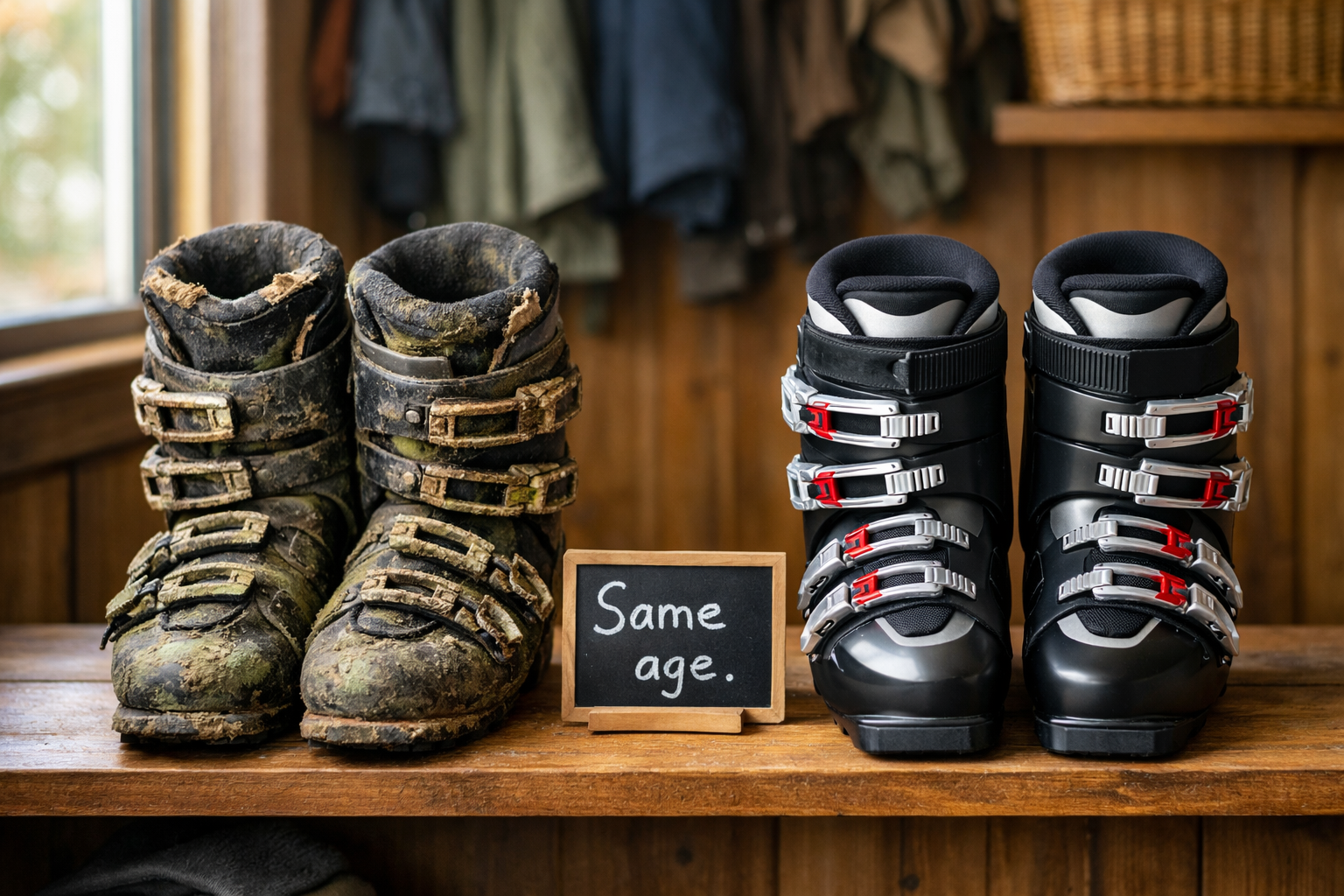
What Wet Gear Actually Costs You: The Real Math Behind Replacing Boots, Gloves, and Helmets Too Early
What Wet Gear Costs You | The Real Math Behind Early Equipment Replacement | Alpine Dryers
by bruce golub • February 20, 2026
You probably know the feeling. You pull on your ski boots the next morning and they're still damp from yesterday. Cold, clammy, and heavy. You deal with it because what else are you going to do? You drove six hours to get here.
But here's what most people don't think about while they're grimacing through that first run: every time you wear wet gear, you're shortening its life. Not by days. By months. Sometimes by years.
And when you add up what that actually costs? The numbers are ugly.
What Moisture Actually Does to Your Gear
Wet boots and gloves aren't just uncomfortable. Moisture attacks your equipment in ways you can see and ways you can't.
Adhesives break down. Modern ski boots use heat-activated adhesives to bond the liner to the shell, attach sole components, and hold buckle mechanisms in place. Water exposure weakens these bonds over time through a process called hydrolysis. That's a big reason liners start separating from shells and soles start peeling earlier than they should. Skiing still wears gear out, but persistent moisture and poor drying are major reasons boots and gloves die sooner than they need to.
Foam compresses and doesn't recover. The EVA and polyurethane foam in boot liners and glove insulation needs to fully dry between uses to maintain its structure. When foam stays wet, it compresses and loses its ability to bounce back. A lot of what people chalk up to their boots being "packed out" from normal use is actually accelerated by moisture that never fully leaves the liner and foam between sessions.
Bacteria and mold eat materials from the inside out. This one is well documented. Bacteria and mold thrive in dark, warm, moist environments. The inside of a wet boot is exactly that. Beyond the obvious smell issue (which we've covered in depth), these organisms physically degrade fabrics, stitching, and liner materials over time. You're literally feeding something that's consuming your gear.
Metal components corrode. Buckles, rivets, zipper pulls, and binding hardware all suffer when moisture hangs around. Aluminum oxidizes. Steel rusts. Even stainless steel can pit when exposed to salt-laden sweat moisture over extended periods.
Leather dries unevenly and cracks. If you own leather work boots, hiking boots, or motorcycle gear, you've probably seen this. Leather that air-dries slowly tends to stiffen and crack because the moisture evaporates unevenly from the surface first, leaving the interior damp. Controlled airflow solves this by drying from the inside out, which is how blower-based systems work.
The Actual Dollar Damage
Let's get specific. The table below combines manufacturer guidance, retailer experience, and typical user reports to estimate how long gear lasts when it dries properly between uses versus when it doesn't. Actual lifespan depends on how hard you ski, how you store your gear, and environmental factors, but the pattern is consistent: moisture that never fully leaves your gear can easily cut its useful life by a third or more.
|
Equipment |
Average Cost |
Typical Lifespan (Properly Dried) |
Typical Lifespan (Regularly Used Wet) |
|
Ski Boots |
$400-$600 |
150-200 days on snow |
80-120 days on snow |
|
Heated Gloves |
$150-$350 |
4-6 seasons |
2-3 seasons |
|
Standard Ski Gloves |
$80-$150 |
3-5 seasons |
1-2 seasons |
|
Snowboard Boots |
$250-$450 |
100-150 days |
60-90 days |
|
Ski Helmet (liner) |
$120-$250 |
5+ seasons |
3 seasons |
|
Work Boots (Leather) |
$200-$400 |
3-5 years |
1-2 years |
Manufacturers commonly cite around 200 skier days as a reasonable lifespan for recreational ski boots under good conditions, while independent gear guides put the realistic average closer to 50-100 days depending on use intensity. The gap between those numbers often comes down to care, and drying is the single biggest care variable most people ignore.
Now multiply that across a family.
A Typical Scenario: Family of Four
In a typical scenario, a family of four skiing 15-20 days per season faces some real math if their gear never fully dries between sessions.
Without proper drying, you're looking at replacing boots every 4-5 seasons instead of 8-10. That's an extra $1,600 to $2,400 in boot costs alone over a decade. Add gloves, and you're approaching $3,000 in unnecessary replacement spending.
For a single person who skis 30+ days a year? You're burning through boots noticeably faster than you should be. The liners pack out sooner, the adhesives weaken faster, and the day you realize your three-season-old boots feel like they're six seasons old, moisture is probably the reason.
The Commercial Side Gets Even Worse
If you run a ski rental shop, a fire station, or any operation where multiple people cycle through gear daily, the math gets serious fast.
Many rental operations cycle out a substantial share of their boot inventory every year, often in the 20-30% range, due to odor, liners packing out, and material fatigue. Moisture accelerates all three of those problems. At $300-$500 per pair at wholesale, even a modest reduction in annual replacement rates saves thousands.
Fire departments face the same issue with turnout gear, which costs $2,000-$3,000 per set. Moisture trapped in the multi-layer construction of turnout gear doesn't just degrade the materials. It can reduce the thermal protection rating, which becomes a safety concern on top of a financial one. The NFPA compliance requirements for gear maintenance exist for exactly this reason.
The "Just Let It Air Dry" Problem
Most people assume that if they leave their boots by the heater or in front of a fan, they're doing enough. They're usually not.
Here's why: air drying loses most of its effectiveness once you get past the surface moisture. The inside of a boot, where sweat and snow melt collect in the toe box and around the ankle padding, can easily take a full day or more to dry out in typical indoor conditions. If you're skiing consecutive days, you're often putting your feet back into gear that's still damp deep in the toe box.
And that's at sea level. If you're at a ski resort at 7,000-10,000 feet, altitude makes drying even slower. At mountain elevations, the combination of cold temperatures, frequent use, and indoor humidity means boots rarely reach "bone dry" between days unless you use mechanical airflow.
Placing boots near a radiator or fireplace creates a different problem. Excessive heat warps plastic shells, melts adhesive bonds, and destroys foam, which is one of the most common drying mistakes people make. You're trying to save your gear and accidentally destroying it faster.
Running the ROI
A quality boot and glove drying system like the ALPINE DRYERS PRO runs between $500-$1,200 depending on configuration. That sounds like a lot until you compare it to what you're already spending on premature replacement.
If you assume boots that could last 150-200 days are only getting 80-120 because they never really dry, a family of four ends up looking at numbers like these over a decade:
- Extra boot replacement costs: $1,600-$2,400
- Extra glove replacement costs: $400-$800
- Extra helmet liner/replacement costs: $200-$400
- Total unnecessary spending: $2,200-$3,600
These are modeled estimates based on midrange gear prices and the lifespan ranges above, not guarantees. Your actual numbers depend on what you buy, how often you use it, and how aggressively you ski. But the direction is always the same: gear that dries properly lasts longer, and the savings add up.
The dryer typically pays for itself within the first 2-3 seasons just on boot savings. Everything after that is money you keep.
For a commercial operation, the payback period is often measured in months, not years.
What This Really Comes Down To
Nobody buys a boot dryer because they love buying boot dryers. They buy one because they got tired of cold, wet, stinking gear and finally did something about it. The money savings are a bonus most people don't think about until after the fact.
But if you're the type who tracks what you spend on gear (and you probably should be), the math points in one direction. Proper drying isn't a luxury. It's basic equipment maintenance, the same as waxing your skis or conditioning your leather boots. And like most maintenance, it's a lot cheaper than replacement.
Your boots, gloves, helmets, and wallet will all last longer when your gear actually gets dry between uses. That's not a sales pitch. That's just how moisture, foam, adhesives, and bacteria work. Take care of the wet problem, and your gear takes care of you for a lot longer.
Related Posts and Information
overall rating:
my rating:
log in to rate